Marble vs Granite for Kitchen Countertops: Which Is the Better Choice?
Introduction to Marble vs Granite for Kitchen Countertops
Choosing the right countertop material is an important decision when designing or renovating a kitchen. Natural stone surfaces add elegance, character, and value to residential interiors. Understanding Marble vs Granite for Kitchen Countertops helps homeowners compare two popular materials and select the most suitable option for their lifestyle, design preferences, and budget.
Both materials offer distinctive advantages. Marble is famous for its elegant veins and luxurious appearance, while granite is appreciated for its hardness, durability, and natural patterns. A careful Marble vs Granite for Kitchen Countertops comparison should consider appearance, everyday performance, maintenance, and installation requirements.
What Makes Marble a Popular Kitchen Countertop Material?
Marble is a natural stone formed through the transformation of limestone under heat and pressure. It is widely appreciated for its flowing veins, sophisticated colors, and timeless appearance. White, beige, grey, and darker marble varieties can complement both classic and contemporary kitchen designs.
When considering Marble vs Granite for Kitchen Countertops, marble is often selected by homeowners who prioritize visual elegance. Its distinctive patterns make every slab unique, creating an attractive focal point in kitchens with elegant cabinets, natural lighting, and coordinated finishes.
Marble can be used for kitchen countertops, islands, backsplashes, and selected decorative surfaces. However, it is relatively porous and sensitive to acidic substances such as lemon juice and vinegar. Regular sealing and suitable cleaning products can help protect its surface.
Why Is Granite Suitable for Kitchen Countertops?
Granite is an igneous natural stone formed when molten material cools beneath the Earth’s surface. It is known for its hardness, durability, and wide range of natural colors and patterns.
In a Marble vs Granite for Kitchen Countertops comparison, granite stands out for its practical qualities. It is available in black, white, brown, grey, beige, and other natural shades. Its mineral-rich patterns create a distinctive appearance that works well with different kitchen styles.
Granite generally offers better resistance to scratches and heat than marble. It is therefore a practical choice for kitchens where food preparation and daily activities happen frequently. However, some granite varieties may still require periodic sealing to reduce liquid absorption.
Marble vs Granite for Kitchen Countertops: Durability Comparison
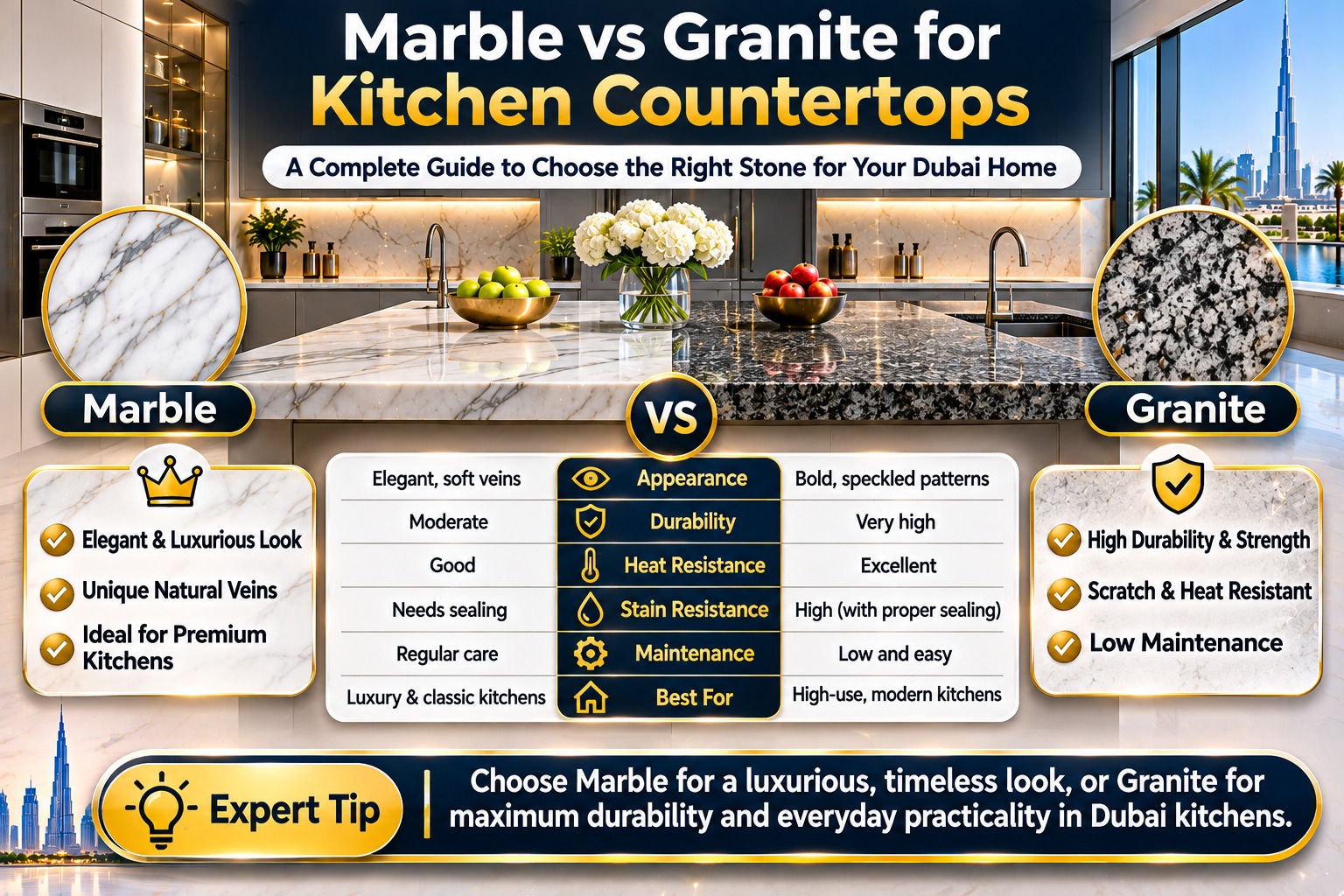
Durability is one of the most important factors when comparing natural stone surfaces. Granite is generally harder and more resistant to scratches, making it suitable for busy kitchens and frequent food preparation.
Marble is softer and can develop scratches or etching more easily. Acidic ingredients may leave dull marks on polished surfaces, even when the stone has been sealed. This difference is important when evaluating Marble vs Granite for Kitchen Countertops for a family kitchen.
For households that prioritize everyday practicality, granite may be the more suitable option. Marble can still perform well when homeowners are prepared to follow appropriate care and maintenance practices.
Appearance and Kitchen Design
The appearance of the stone can influence the entire kitchen design. Marble is often selected for its elegant veins, soft color variations, and luxurious character. It works particularly well in classic, contemporary, and minimalist interiors.
Granite offers a different visual style, with varied mineral patterns and natural color combinations. It can complement wooden cabinets, modern kitchen units, neutral interiors, and bold design schemes.
When making a Marble vs Granite for Kitchen Countertops decision, compare actual slabs rather than relying only on small photographs. Natural stone patterns and colors can vary significantly from one slab to another.
Maintenance Requirements for Marble and Granite
Both materials require appropriate maintenance to preserve their appearance. Marble usually needs more careful attention because it is more vulnerable to acidic substances, stains, and surface etching.
For marble countertops, clean spills quickly, use pH-neutral stone cleaners, avoid abrasive materials, and follow professional sealing recommendations.
Granite is generally easier to maintain, but it should also be cleaned with suitable products. Avoid harsh chemicals and check whether the selected variety requires periodic sealing.
Proper maintenance is an essential consideration in Marble vs Granite for Kitchen Countertops, especially for homeowners who want their surfaces to maintain their appearance for many years.
For additional natural stone care information, consult the Natural Stone Institute.
Cost Considerations for Kitchen Countertops
The cost of natural stone depends on several factors, including stone type, origin, color, slab quality, thickness, finish, fabrication, and installation requirements.
Some marble varieties can be expensive because of their rarity, appearance, and distinctive veining. Granite prices also vary according to the stone’s origin, pattern, quality, and availability.
A complete Marble vs Granite for Kitchen Countertops cost comparison should include more than the price of the slab. Measurements, edge profiles, sink and cooktop cutouts, transportation, fabrication, and installation can all affect the final budget.
Which Material Is Better for Your Kitchen?
The right choice depends on your priorities. Marble is an excellent option for homeowners who value luxurious appearance, elegant veining, and distinctive natural patterns. Granite is often preferable for busy kitchens that require a harder surface and practical everyday performance.
Before choosing, consider how frequently the kitchen is used, how much maintenance you are willing to perform, and which appearance complements your cabinets and flooring. Comparing Marble vs Granite for Kitchen Countertops through actual samples can help you make a confident decision.
Choosing Kitchen Countertops at Savan Store
Selecting a suitable natural stone countertop requires careful attention to quality, dimensions, finish, and installation requirements. At Savan Store, homeowners can explore natural stone options and compare materials for different interior applications.
Whether you prefer the elegant appearance of marble or the practical qualities of granite, reviewing actual samples helps you make an informed choice. A professional supplier can also help you understand the stone specifications, fabrication requirements, and suitable applications.
Conclusion
Choosing between marble and granite requires balancing beauty, durability, and maintenance. Marble is ideal for elegant kitchens where appearance is a priority, while granite offers excellent practical qualities for regular use. A detailed Marble vs Granite for Kitchen Countertops comparison, supported by actual samples and technical specifications, helps homeowners select a surface that suits their kitchen design and lifestyle.