Natural Stone vs Porcelain Outdoor Flooring: Which Is Best for Abu Dhabi Homes?
Introduction
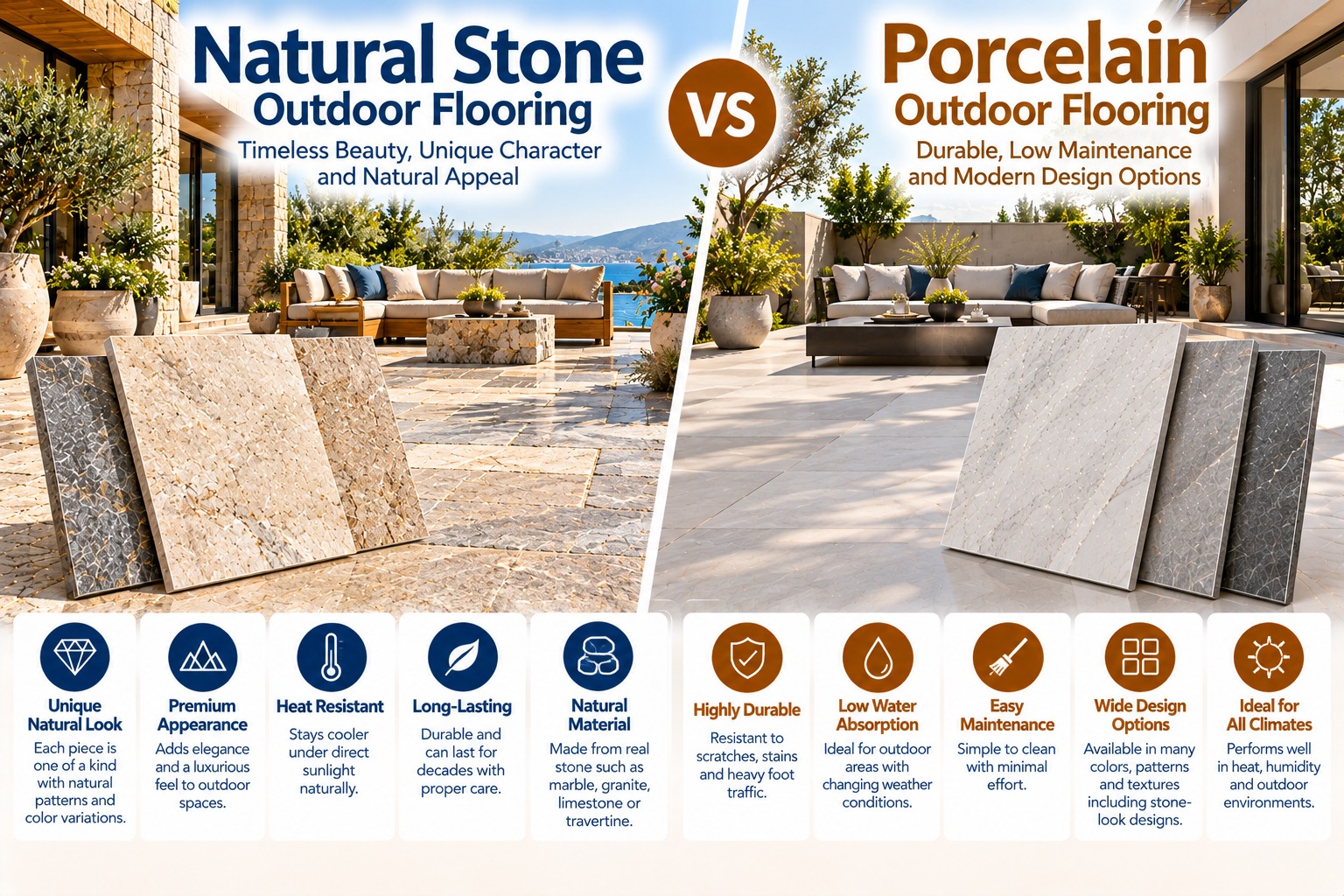
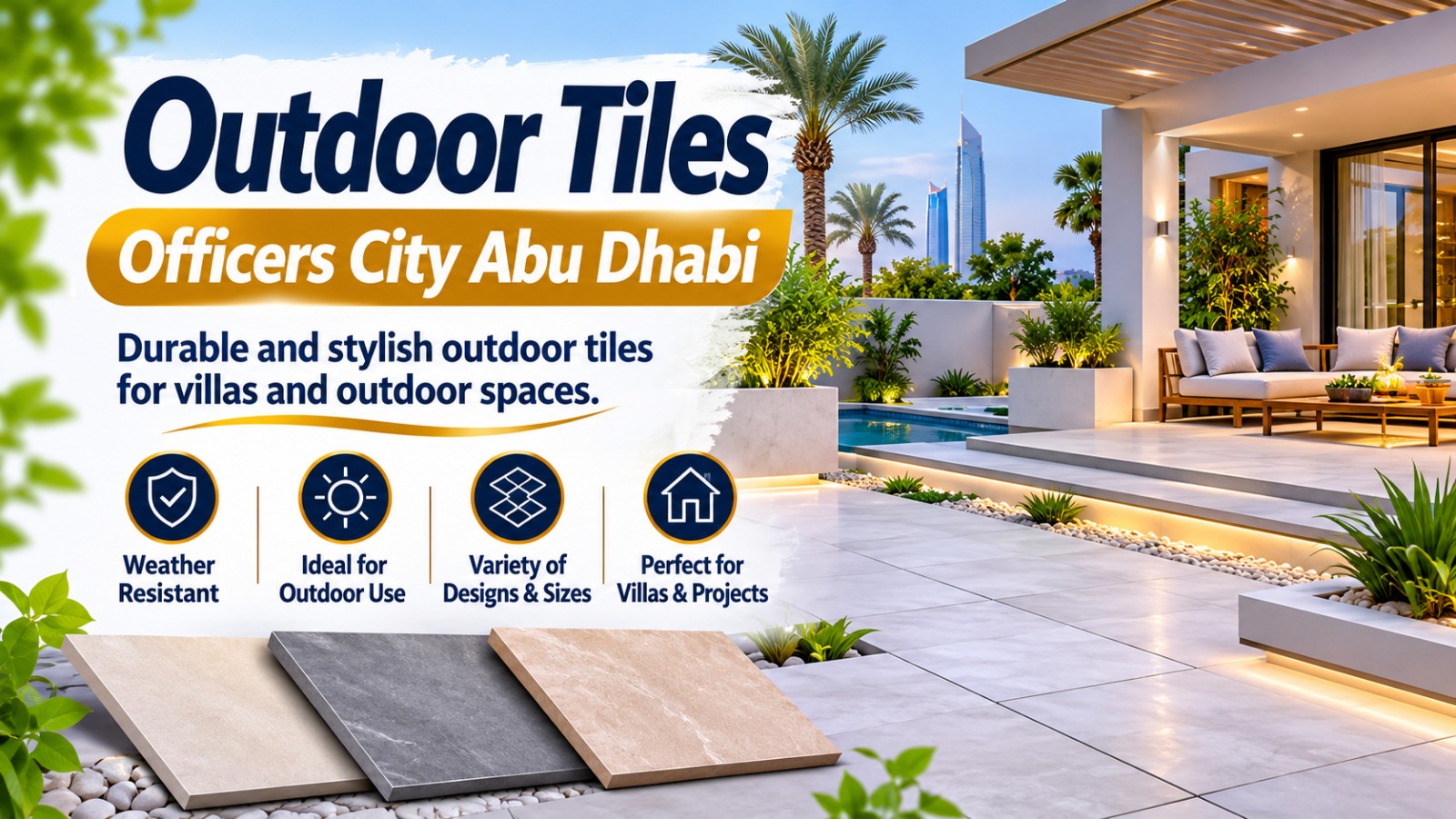
Choosing the right outdoor flooring is essential for creating attractive, durable, and functional exterior spaces. Natural Stone vs Porcelain Outdoor Flooring is an important comparison for homeowners who want to balance appearance, durability, maintenance, and cost. In Abu Dhabi, where patios, gardens, terraces, and villa entrances experience strong sunlight and high temperatures, choosing the right outdoor tiles can improve both the beauty and practicality of exterior spaces.
Whether you are upgrading a luxury villa on Saadiyat Island, designing a garden on Yas Island, or renovating a terrace in Khalifa City, comparing natural stone and porcelain outdoor flooring can help you select a solution that suits your style and budget.
1. Natural Stone vs Porcelain Outdoor Flooring: Key Differences
Natural stone flooring includes materials such as granite, limestone, travertine, and slate. Each stone has unique patterns, textures, and color variations, creating an authentic appearance for luxury outdoor spaces.
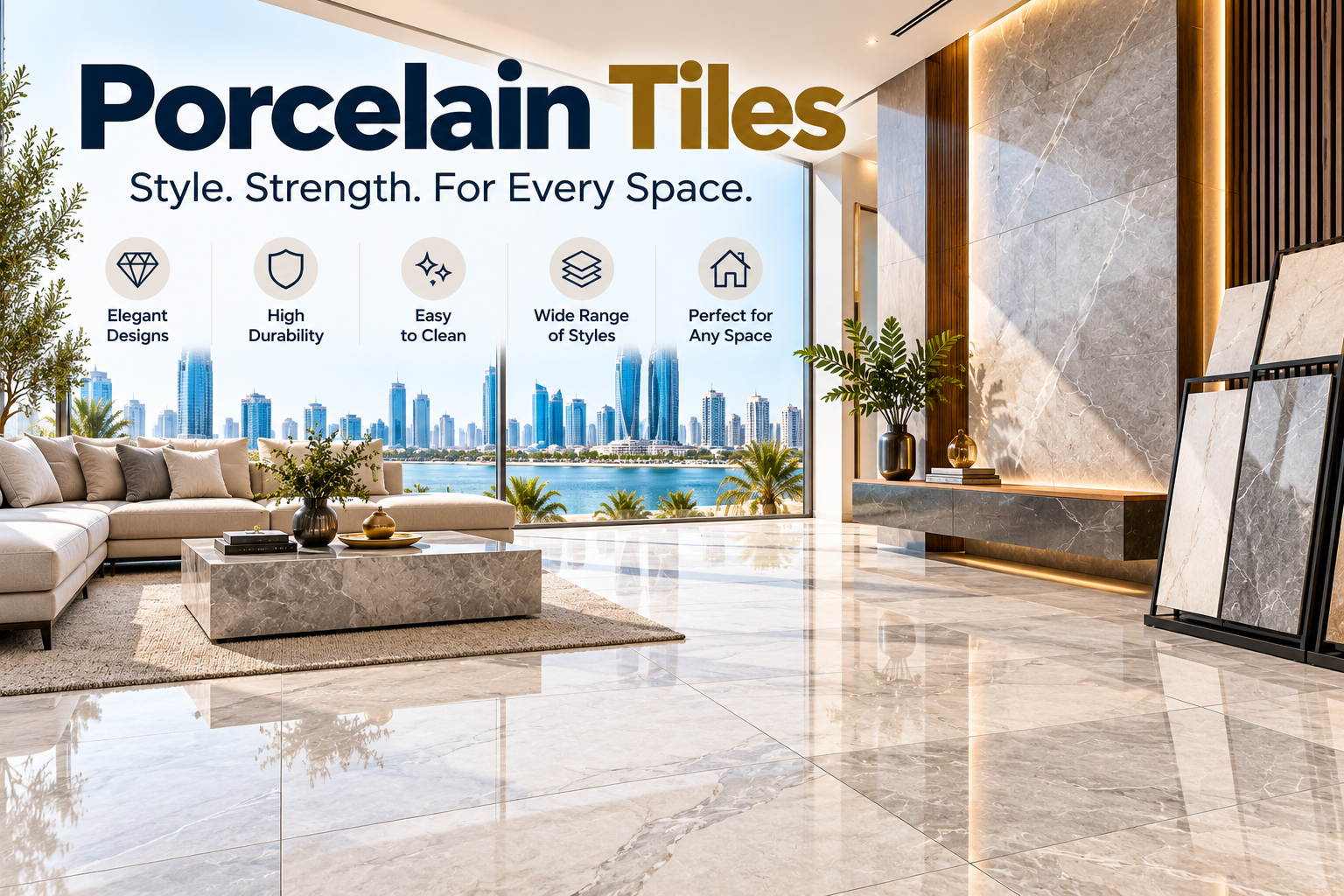
Porcelain outdoor tiles are manufactured from refined clay-based materials and fired at high temperatures. They offer a wide range of stone-look, concrete-look, and wood-look designs with different surface finishes.
When comparing Natural Stone vs Porcelain Outdoor Flooring, consider the appearance you prefer, the installation requirements, and the conditions of your outdoor space. Both materials can work well when the selected product is appropriate for its intended use.
2. Durability and Weather Resistance
Outdoor flooring must withstand sunlight, temperature changes, foot traffic, and occasional water exposure. Natural stone can be highly durable, but its performance depends on the stone type, surface finish, installation, and maintenance requirements.
Porcelain outdoor flooring generally has low water absorption, making it a practical option for many exterior applications. However, tiles must be specifically rated for outdoor use and installed according to the manufacturer’s recommendations.
For Abu Dhabi properties, Natural Stone vs Porcelain Outdoor Flooring should be evaluated according to local weather conditions and the intended application. Choosing suitable materials can help maintain the appearance and performance of patios, pathways, and terraces over time.
3. Heat Resistance and Slip Safety
Outdoor surfaces in Abu Dhabi can become very hot under direct sunlight. Both natural stone and porcelain can heat up depending on their color, density, finish, and exposure. Lighter shades may be preferable for some sun-exposed areas, although actual surface temperatures vary.
Slip resistance is also important around swimming pools, outdoor showers, and garden paths. Textured natural stone and porcelain tiles with suitable slip-resistant finishes can help improve footing when surfaces are wet.
When choosing Natural Stone vs Porcelain Outdoor Flooring, check the manufacturer’s slip-resistance information and confirm that the product is suitable for the intended environment. Poolside flooring should be specifically recommended for wet, barefoot use.
4. Design, Colors, and Outdoor Style
Natural stone provides authentic patterns and organic variations that make every installation distinctive. Travertine can create a warm Mediterranean look, while granite may suit contemporary spaces that require a more structured appearance.
Porcelain outdoor flooring offers a wide selection of colors and designs, including marble-look, stone-look, concrete-look, and wood-look finishes. Grey, beige, cream, taupe, and earthy tones are popular choices for modern Abu Dhabi villas.
Comparing Natural Stone vs Porcelain Outdoor Flooring also helps homeowners coordinate patios and garden areas with their exterior walls, landscaping, and architectural style. Large-format porcelain tiles can create a clean, contemporary appearance, while natural stone adds character and texture.
5. Maintenance and Installation Costs
Natural stone may require sealing and specific cleaning products, depending on its type and finish. Some stones are more porous or sensitive to acidic cleaners, so following the supplier’s care instructions is essential.
Porcelain outdoor flooring generally requires less routine maintenance because of its low water absorption. Regular sweeping and cleaning with suitable products can help preserve its appearance.
When comparing the total cost of Natural Stone vs Porcelain Outdoor Flooring, include the purchase price, surface preparation, drainage, adhesives, grout, labor, and any sealing requirements. The most suitable option depends on both your initial budget and long-term maintenance expectations.
For additional guidance on natural stone care, consult the Natural Stone Institute’s Care and Cleaning Guide.
6. Which Outdoor Flooring Is Best for Abu Dhabi Homes?
The best choice depends on your design preferences, budget, and how the area will be used. Natural stone is an excellent option for homeowners who value authentic textures and unique patterns. Porcelain is often suitable for those seeking design flexibility, low water absorption, and convenient maintenance.
For villas in Al Raha and Mohammed Bin Zayed City, compare samples in natural daylight and confirm that the selected product is suitable for outdoor installation. Consider surface temperature, drainage, slip resistance, and installation methods before making a final decision.
Understanding Natural Stone vs Porcelain Outdoor Flooring can help you choose materials that complement your property while meeting the practical demands of Abu Dhabi’s outdoor environment.
Conclusion
Choosing between Natural Stone vs Porcelain Outdoor Flooring depends on your preferred style, maintenance expectations, and outdoor requirements. Natural stone provides distinctive patterns and timeless character, while porcelain offers versatile designs and generally straightforward maintenance. By comparing durability, heat exposure, slip resistance, and total installation costs, Abu Dhabi homeowners can create beautiful outdoor spaces suited to their needs.