Outdoor Tile Slip Resistance Ratings: A Complete Guide for UAE Projects
Introduction
Choosing outdoor flooring requires more than selecting an attractive colour or design. Safety is equally important, especially in areas exposed to rain, irrigation water, pool splashes, or regular cleaning. Understanding Outdoor Tile Slip Resistance Ratings helps homeowners, contractors, architects, and designers select suitable surfaces for different outdoor applications.
In the UAE, outdoor tiles are commonly installed around villas, gardens, patios, balconies, walkways, terraces, and swimming pools. These areas can become slippery when wet, making the right surface finish an important part of a safe flooring specification. Reviewing Outdoor Tile Slip Resistance Ratings before purchasing also helps buyers compare products using technical information rather than relying only on appearance or marketing descriptions.
This guide explains the main slip resistance measurements, how to interpret tile ratings, and what to consider when choosing outdoor flooring for residential and commercial projects.
What Are Outdoor Tile Slip Resistance Ratings?
Outdoor Tile Slip Resistance Ratings are test results or product classifications used to evaluate how a tile surface performs under specific conditions. They help buyers understand the traction characteristics of a flooring product and assess whether it may be suitable for a particular location.
Different testing methods measure surface friction in different ways. Therefore, Outdoor Tile Slip Resistance Ratings from separate test systems should not automatically be treated as equivalent or interchangeable.
When comparing outdoor tiles, check the following information:
The testing standard and method used.
Whether the test was performed under wet or dry conditions.
The intended application declared by the manufacturer.
The tile’s surface texture and finish.
Whether the product is suitable for outdoor pedestrian use.
Any maintenance or installation conditions specified by the manufacturer.
A tile described as anti-slip should have supporting technical information. Checking Outdoor Tile Slip Resistance Ratings is a more reliable way to compare products than depending on a general anti-slip label alone.
Understanding the Main Outdoor Tile Slip Resistance Ratings
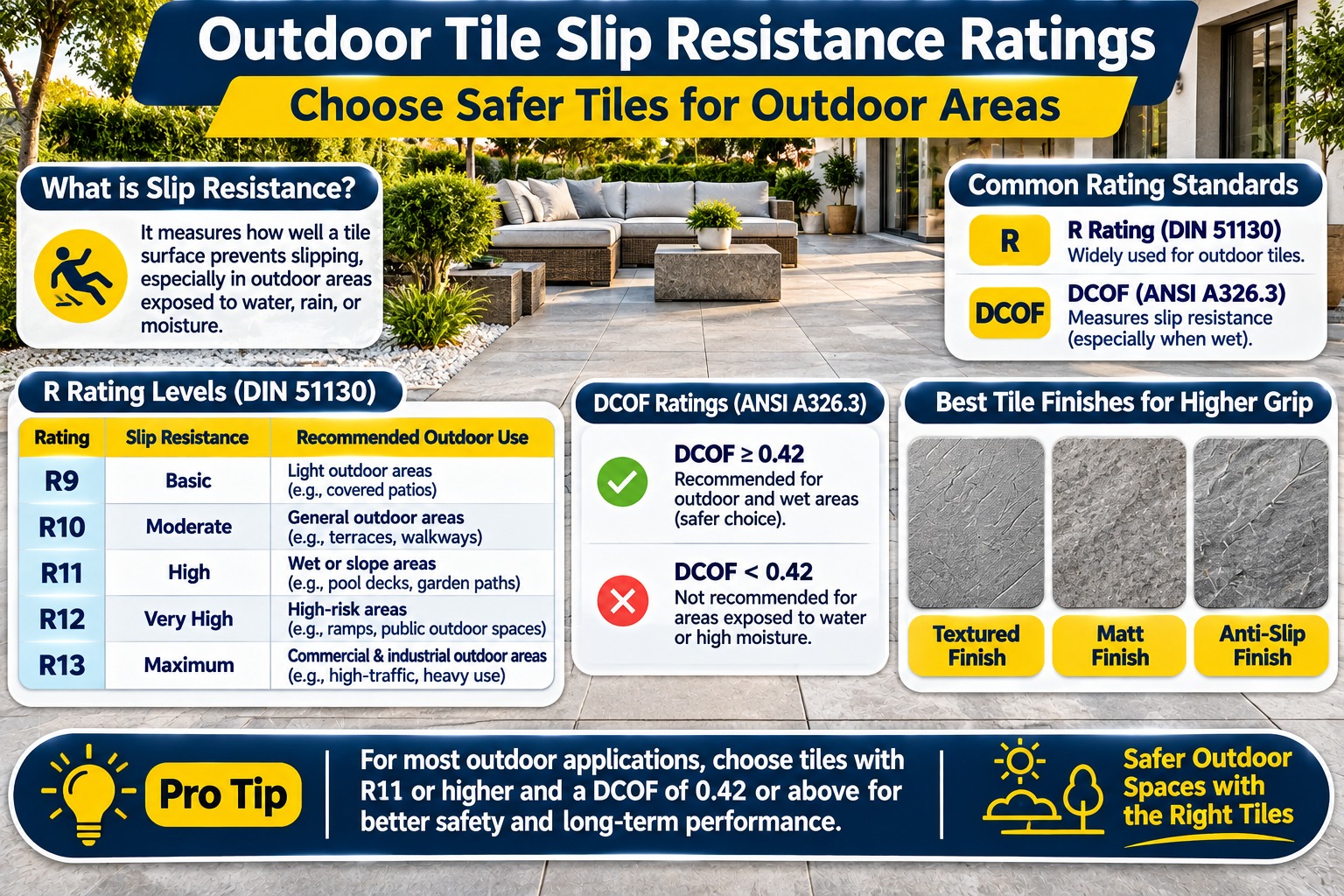
Several testing methods are used internationally to evaluate flooring surfaces. The most relevant measurements when reviewing Outdoor Tile Slip Resistance Ratings include DCOF, R classifications, and Pendulum Test Values.
1. DCOF – Dynamic Coefficient of Friction
DCOF measures the friction between a flooring surface and a test sensor while movement occurs. It is commonly used in North American tile specifications under ANSI A326.3.
The classification system includes different intended-use categories, such as:
For exterior wet applications, the manufacturer should declare the appropriate product-use classification and provide supporting technical information. A DCOF value of 0.60 or higher is sometimes used as a reference in manufacturer guidance, but it should not be treated as a universal requirement for every outdoor project.
When reviewing Outdoor Tile Slip Resistance Ratings, always check the test conditions and the manufacturer’s declared application. A numerical result without its testing context may not provide enough information to determine whether a tile is suitable.
Read the official explanation from the Tile Council of North America: DCOF Frequently Asked Questions.
2. R Ratings – Ramp Test Classification
R ratings are associated with the ramp test under DIN EN 16165. The test evaluates slip resistance on an inclined surface under specified conditions, typically using footwear and an oil contaminant.
Common classifications include:
| R Rating | General Classification |
|---|
| R9 | Lower slip resistance |
| R10 | Moderate slip resistance |
| R11 | Higher slip resistance |
| R12 | Very high slip resistance |
| R13 | Extremely high slip resistance |
Higher R classifications indicate greater resistance under the specific test conditions. However, an R rating alone does not guarantee that a tile is suitable for every outdoor environment.
For example, a villa patio, an inclined outdoor ramp, and a pool surround have different safety requirements. When comparing Outdoor Tile Slip Resistance Ratings, consider the actual installation area and follow the manufacturer’s recommendations rather than choosing a product based only on the highest number.
3. PTV – Pendulum Test Value
The Pendulum Test measures the frictional performance of a surface using a moving rubber slider. Results are expressed as a Pendulum Test Value (PTV).
PTV testing can assess surfaces under wet and dry conditions, making it useful when evaluating flooring that may be exposed to water.
Some UK guidance uses a wet PTV of 36 or above as an indication of low slip potential under the relevant test conditions. However, the correct specification depends on the project, test method, and applicable local requirements.
PTV results can provide another useful point of comparison when assessing Outdoor Tile Slip Resistance Ratings, particularly for walkways, terraces, and other areas that may become wet.
Recommended Slip Resistance for Different Outdoor Areas
Not every outdoor space requires the same tile finish. The expected moisture level, slope, traffic, and maintenance conditions should influence the selection. Understanding Outdoor Tile Slip Resistance Ratings for each application helps prevent choosing a product that is unsuitable for its intended location.
| Outdoor Area | Important Selection Considerations |
|---|
| Villa patios | Suitable wet-use classification and textured finish |
| Garden walkways | Traction, drainage, and comfortable movement |
| Swimming pool surrounds | Wet-area performance and barefoot suitability |
| Outdoor stairs | Suitable traction, visible step edges, and safe detailing |
| Driveways | Vehicle-load suitability and appropriate surface texture |
| Balconies | Water drainage and suitable exterior flooring |
| Outdoor ramps | Slip resistance appropriate to the slope and intended use |
These recommendations are selection considerations rather than universal numerical requirements. Always follow the manufacturer’s technical guidance and applicable project specifications when interpreting Outdoor Tile Slip Resistance Ratings.
Best Outdoor Tile Finishes for Slip Resistance
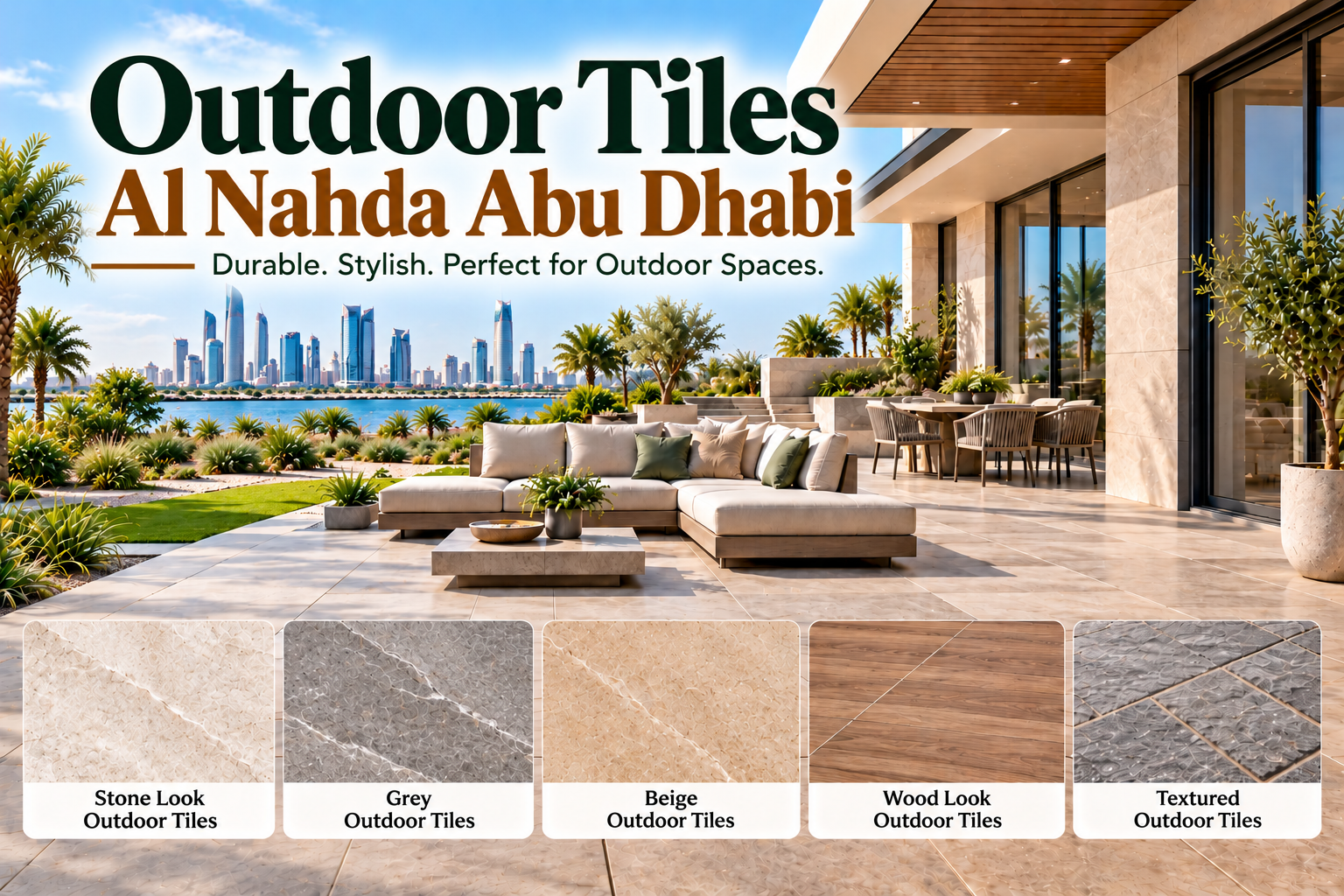
The surface finish plays an important role in how outdoor flooring performs. Alongside Outdoor Tile Slip Resistance Ratings, buyers should examine the actual texture, intended use, and maintenance requirements of each product.
Textured Porcelain Tiles
Textured porcelain tiles are widely considered for patios, garden paths, terraces, and other outdoor spaces. Their surface structure can help provide traction when selected with suitable wet-use performance.
When comparing textured products, review their technical specifications and confirm that the manufacturer recommends them for the intended exterior application.
Matte Outdoor Tiles
Matte finishes generally avoid the highly reflective surface associated with polished flooring. However, a matte appearance alone does not prove that a tile is slip-resistant. Check the actual test results and application classification before making a decision.
Stone-Look Outdoor Tiles
Stone-look porcelain offers the appearance of natural stone with a range of surface textures and design options. It can be suitable for outdoor projects when the selected product is specifically approved for the intended conditions.
Natural Stone Finishes
Natural stone such as granite, limestone, and travertine may be considered for exterior flooring. Its performance depends on the stone type, surface treatment, porosity, maintenance, and installation conditions.
Explore suitable material options through Savan Store’s natural stone collection.
How to Choose the Right Outdoor Tile Slip Resistance Ratings
Before purchasing outdoor tiles, consider the following steps to make an informed decision:
Identify the installation area: Determine whether the tiles will be installed around a pool, on a patio, in a garden, or on an outdoor staircase.
Check the technical data: Request the manufacturer’s slip resistance test results and product-use classification.
Confirm wet-area suitability: Do not rely exclusively on dry test results when the floor will regularly become wet.
Review the surface finish: Compare textured, structured, and matte finishes using actual product samples.
Consider drainage: Proper water drainage helps prevent standing water and reduces potential slipping hazards.
Check installation requirements: Confirm substrate preparation, slope, grout joints, and suitable exterior adhesives.
Review maintenance instructions: Dirt, algae, grease, and cleaning-product residues can affect surface traction.
These steps make it easier to compare Outdoor Tile Slip Resistance Ratings and select a product that matches the actual conditions of the project. Buyers should also request written confirmation of the recommended application whenever the flooring will be exposed to frequent moisture.
Common Mistakes When Selecting Anti-Slip Outdoor Tiles
Some purchasing decisions can create avoidable safety and maintenance problems. Even when a product has promising Outdoor Tile Slip Resistance Ratings, incorrect installation or unsuitable maintenance can affect its performance.
Common mistakes include:
Choosing tiles based only on appearance.
Assuming every matte tile is automatically anti-slip.
Comparing DCOF and R ratings as if they were identical.
Using indoor flooring products in exposed outdoor locations.
Ignoring water drainage and surface slope.
Selecting polished tiles for areas frequently exposed to water.
Failing to request technical specifications from the supplier.
Ignoring the manufacturer’s cleaning and maintenance instructions.
The best approach is to evaluate the complete product specification rather than relying on one rating or a general anti-slip label.
Outdoor Tile Slip Resistance Ratings for Villas and Projects in the UAE
Outdoor flooring in the UAE should be selected with local environmental conditions in mind. High temperatures, dust, irrigation, pool water, and frequent cleaning can influence the long-term performance of exterior surfaces.
For villas and residential developments, suitable outdoor tiles may be required for entrances, terraces, balconies, courtyards, garden paths, and pool areas. Each location may have different exposure levels and practical requirements.
When reviewing Outdoor Tile Slip Resistance Ratings for UAE projects, buyers should also consider durability, water absorption, resistance to temperature changes, surface cleaning, and installation requirements.
For larger projects, architects and contractors should request product samples and technical data sheets before finalising the specification. This makes it easier to compare Outdoor Tile Slip Resistance Ratings across different collections and confirm that the selected tiles meet the design and performance requirements of each area.
Conclusion
Understanding Outdoor Tile Slip Resistance Ratings is an important part of choosing safe and practical exterior flooring. DCOF, R classifications, and PTV measurements provide useful information, but each method has different testing conditions and limitations.
The right outdoor tile should match its intended application, expected moisture exposure, surface conditions, and maintenance requirements. By checking manufacturer documentation, comparing finishes, and planning proper drainage and installation, homeowners and contractors can make more informed flooring decisions for projects across the UAE.
Before selecting a product, compare its Outdoor Tile Slip Resistance Ratings with the requirements of the installation area and confirm its suitability with the manufacturer.