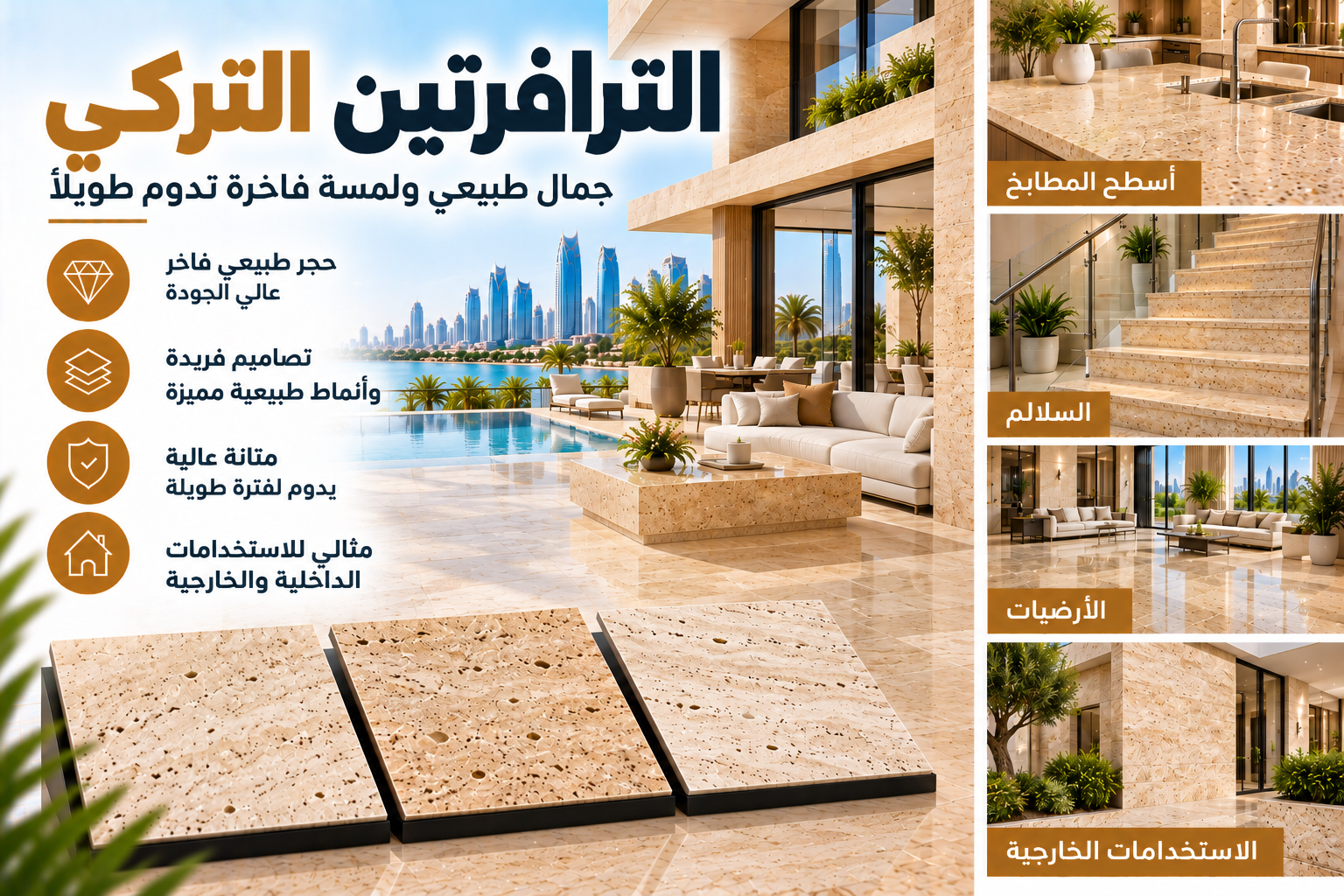
Turkish Travertine Marble
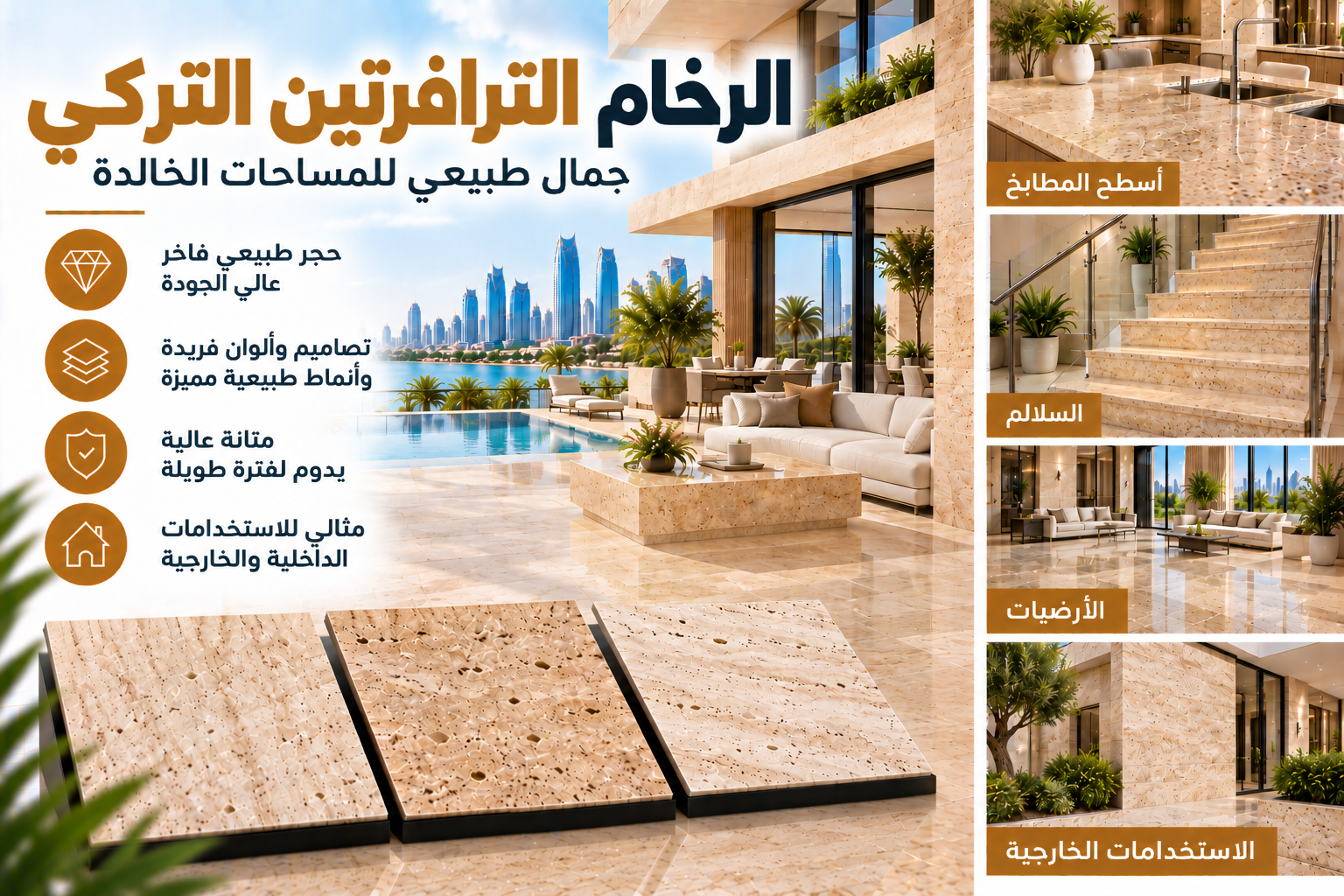
Turkish Travertine Marble is a commercial search term commonly used by buyers looking for natural travertine from Turkey for villas, flooring, walls, staircases, bathrooms, landscaping, and architectural projects. Although the word “marble” is sometimes used commercially with travertine, the stone is technically classified as a type of limestone rather than true marble.
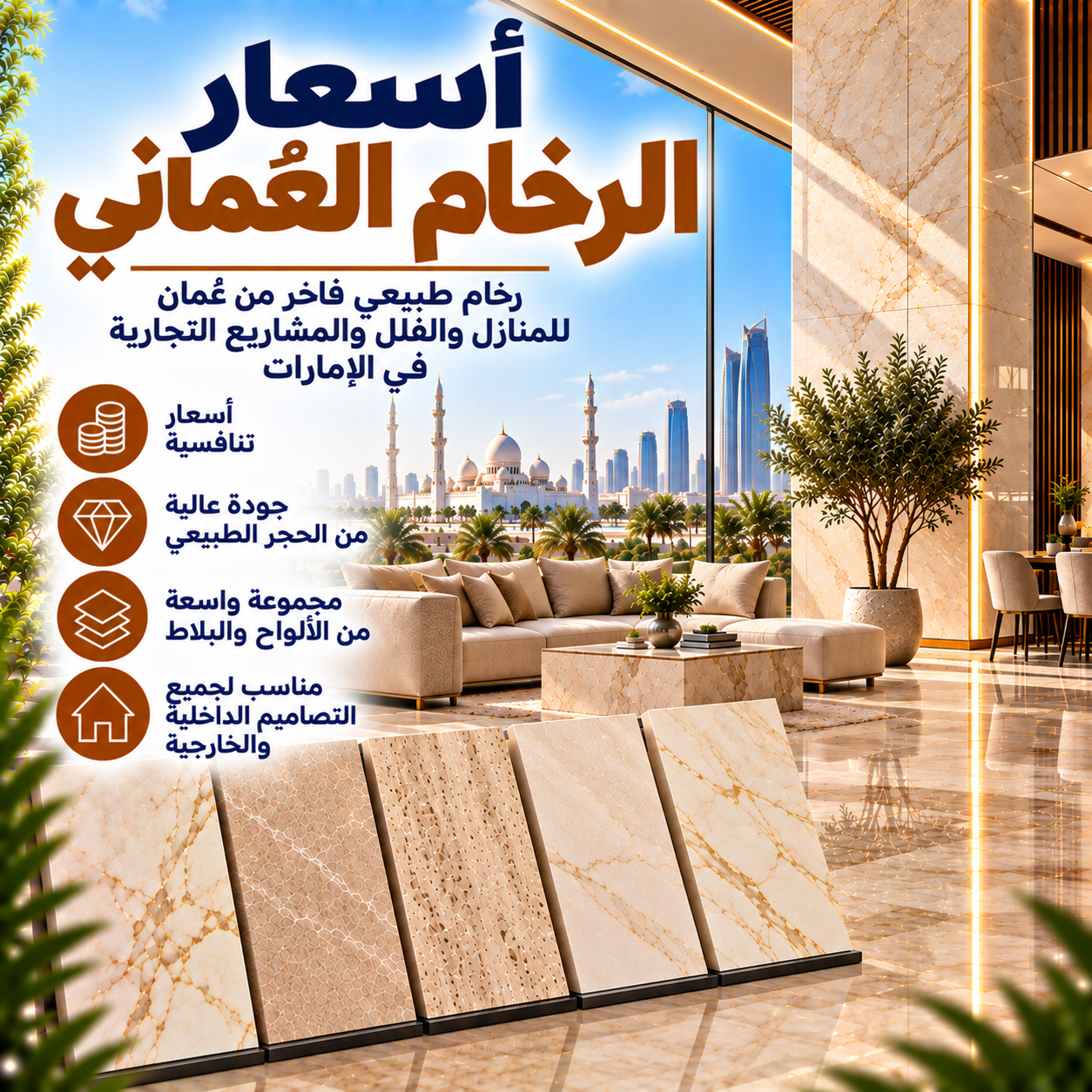
Turkish material is particularly recognized for warm beige, cream, ivory, walnut, and brown tones. Its natural pores, layered structure, and variety of finishes give architects and homeowners many design possibilities for suitable residential and commercial projects in the UAE.
What Is Turkish Travertine Marble?
The term generally refers to natural travertine quarried in Turkey and sold as slabs, tiles, cut-to-size pieces, and architectural stone.
Travertine forms through the precipitation of calcium carbonate, creating characteristic holes and voids throughout the material.
According to the Natural Stone Institute, travertine belongs to the limestone family. Buyers should therefore understand that “travertine marble” is a commercial description rather than a precise geological classification.
Why Is It Called Travertine Marble?
Natural-stone terminology can differ between markets.
Some suppliers and customers use “marble” as a broad commercial description for decorative natural stone. However, travertine and geological marble are different materials.
For technical specifications, architectural schedules, and large commercial projects, use the correct stone classification supplied by the quarry or manufacturer.
Turkish Travertine Colors
One reason Turkish stone is popular in architectural design is its range of warm natural colors.
Common selections include:
البيج الفاتح
كريمي
عاجي
Walnut
بني
Golden tones
Yellowish shades
Reddish selections
Color, movement, pores, and pattern can vary naturally between quarry blocks and production batches.
Travertine Marble Tiles
Tiles can be produced in different dimensions and thicknesses for suitable architectural applications.
Potential uses include floors, walls, villa entrances, bathrooms, corridors, reception areas, and decorative surfaces.
Before ordering, verify the actual stone selection, dimensions, thickness, finish, filled or unfilled surface, required quantity, and intended application.
Travertine Slabs
Slabs allow buyers to see more of the stone’s natural movement and layered character.
When comparing slabs, inspect:
Overall color
Natural pores
Vein direction
اختلافات النقوش
الابعاد
السماكة
نوع التشطيب السطحي
الكمية المتوفرة
For large projects, inspect representative slabs before fabrication.
Turkish Travertine Marble Flooring
Turkish Travertine Marble can be considered for suitable flooring applications when the specific stone, thickness, finish, installation system, and project conditions are appropriate.
Its warm natural appearance can complement timber, neutral walls, beige interiors, glass, metal, and contemporary furniture.
For villa flooring, compare physical samples under the property’s actual lighting conditions before approving the final material.
Natural Stone for Villas
Turkish travertine works particularly well with architectural concepts based on natural and earth-tone materials.
Depending on project requirements, it may be considered for villa entrances, living areas, staircases, feature walls, bathrooms, terraces, landscaping, and decorative elements.
The selected finish should match the intended application rather than being chosen only for appearance.
Travertine for Walls
Natural pores and layered patterns can create distinctive feature walls.
The stone may be considered for suitable interior walls, entrance features, reception areas, villa architecture, and selected exterior cladding.
Vertical installations require appropriate consideration of dimensions, stone weight, substrate, fixing system, and professional installation requirements.
Outdoor Applications
Selected travertine can be considered for exterior architectural and landscaping projects.
However, outdoor suitability depends on the particular material, finish, dimensions, installation system, climate, substrate, and site conditions.
Buyers should confirm the proposed specification before placing a substantial order.
Vein Cut Travertine
Vein cutting exposes the natural layers of the stone and creates a more linear visual pattern.
This style can work particularly well for feature walls and architectural designs where designers want directional movement.
The appearance should be reviewed using actual samples.
Cross Cut Travertine
Cross cutting produces a different appearance, often showing a more cloud-like or varied pattern instead of strong linear veins.
Neither cutting method is universally better. The appropriate choice depends primarily on the desired visual effect and project specifications.
Filled vs Unfilled Stone
Travertine naturally contains holes and voids.
During processing, these openings may be filled to create a different finished surface or left visible for a more textured natural appearance.
Confirm the filling method and finish before ordering because they can significantly affect the final appearance.
Turkish Travertine Marble Price
Pricing depends on stone selection, color, grade, dimensions, thickness, cut direction, surface finish, filling, quantity, fabrication, transportation, supplier, and current availability.
For cut-to-size villa or commercial projects, request a complete quotation rather than comparing only the raw material rate.
What to Check Before Buying
Before purchasing, verify:
For additional technical information about travertine and limestone, buyers can consult the Natural Stone Institute limestone guide.
Where to Buy in UAE
Customers searching for this material can compare natural-stone suppliers serving Abu Dhabi, Dubai, Sharjah, Ajman, Al Ain, and other Emirates.
For villas and commercial projects, inspect representative samples and request detailed specifications before approving the order.
الخاتمة
Turkish Travertine Marble is a commonly searched commercial term for Turkish natural travertine, a limestone characterized by natural pores, warm colors, and distinctive patterns. It is available in different cuts, dimensions, finishes, and selections for a variety of suitable architectural applications.
Before purchasing, compare actual material, verify its specifications and intended application, and confirm sufficient stock for the complete project.