مقالات
Turkish Travertine

Turkish Travertine
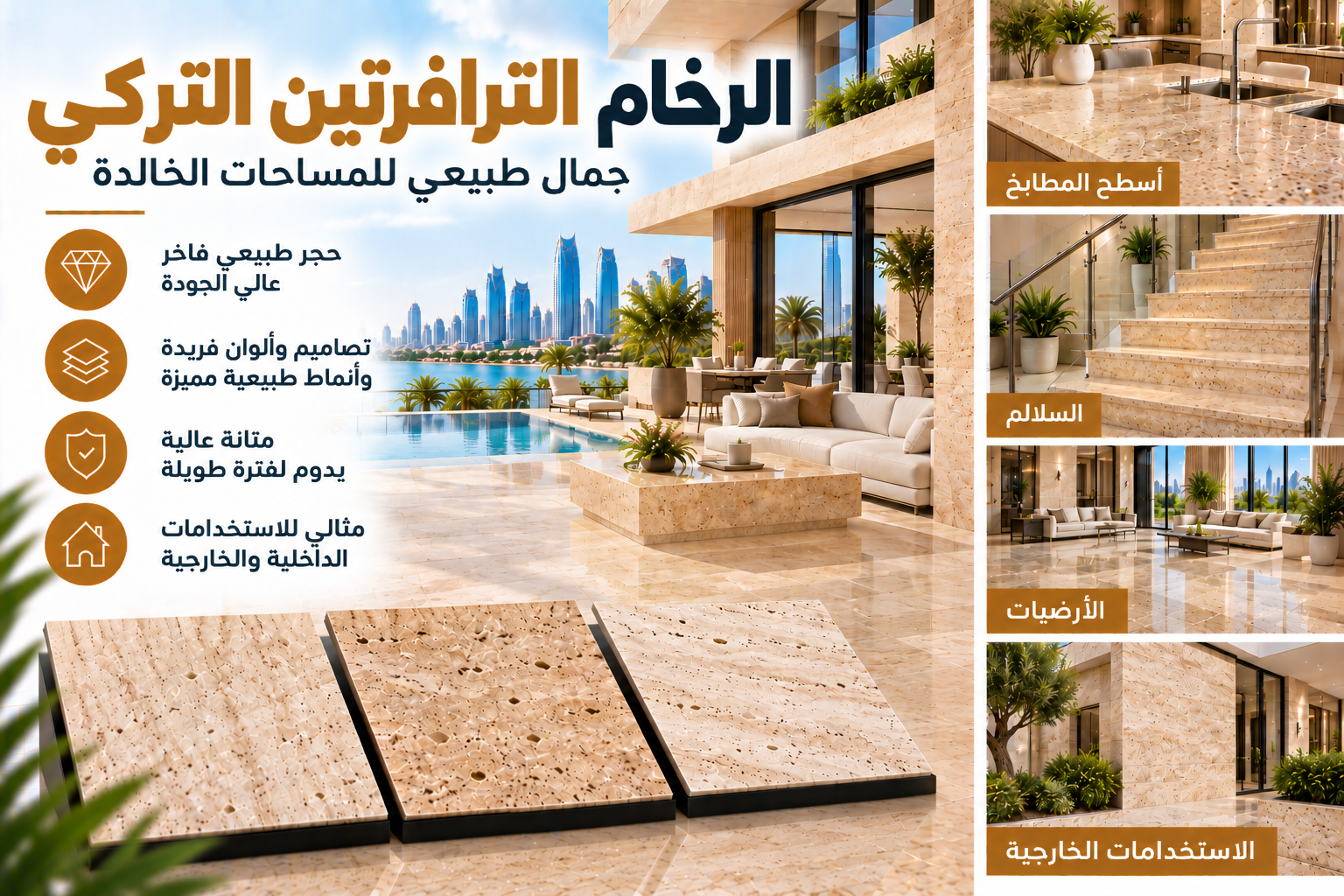
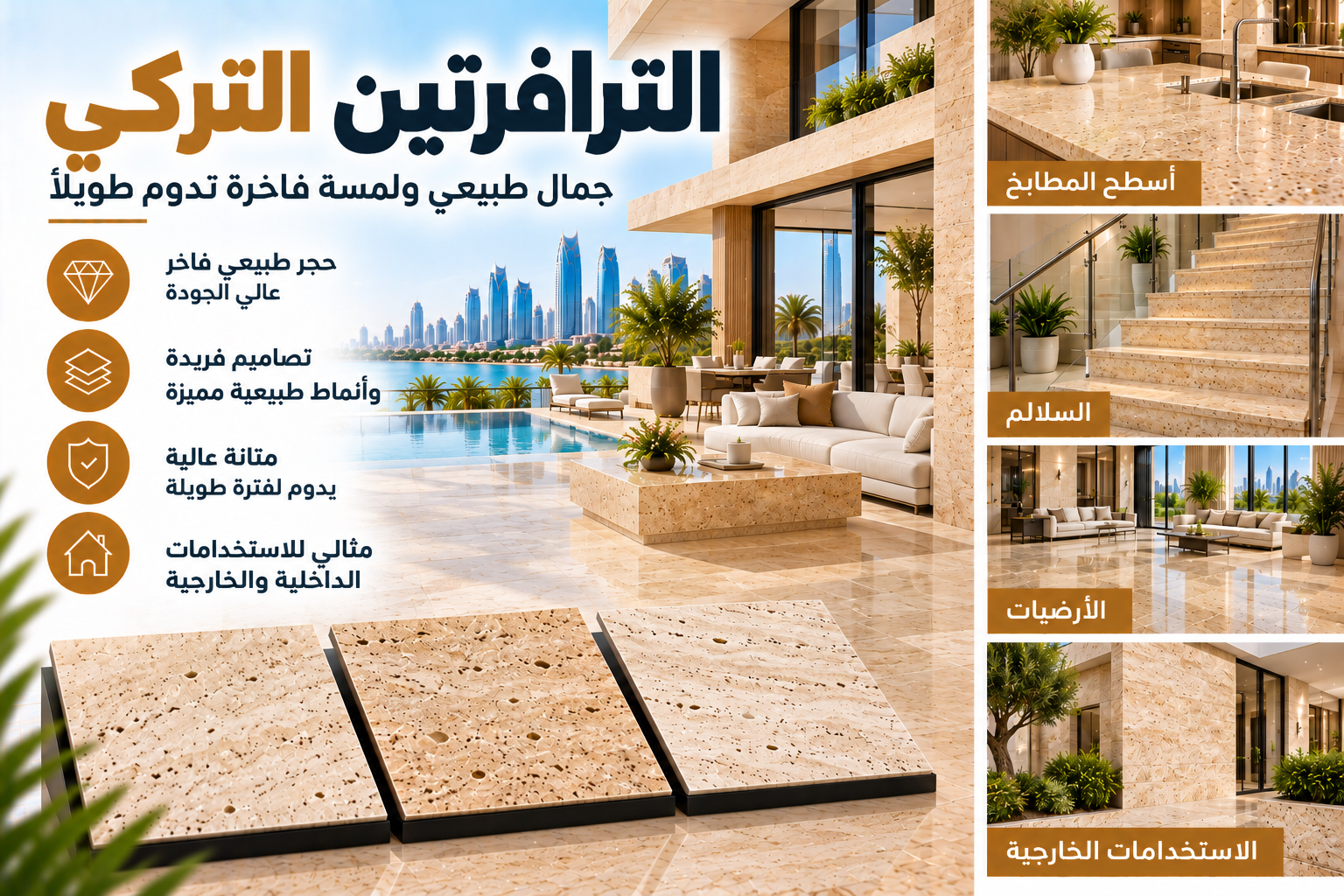
Turkish Travertine is a natural stone known for its warm earth tones, distinctive texture, and characteristic pores created during its natural formation. Turkey is one of the Mediterranean countries strongly associated with travertine production, offering selections in beige, cream, ivory, walnut, brown, and other natural shades.
For UAE homeowners, architects, interior designers, contractors, and developers, this stone can be considered for suitable villa floors, walls, staircases, bathrooms, entrances, landscaping, and selected exterior applications. Before ordering, buyers should compare actual samples and verify the stone selection, dimensions, thickness, finish, quantity, and intended application.
What Is Travertine?
Travertine is a natural calcareous stone. According to the Natural Stone Institute, it is technically a type of limestone formed on land rather than a marble, despite the historical use of terms such as “travertine marble.”
One of its most recognizable characteristics is the presence of natural holes and voids within the stone.
These features are part of its geological character rather than necessarily signs of damage.
Travertine from Turkey
Turkey has a long-established natural-stone industry and is one of the Mediterranean sources associated with this material.
Natural selections can vary considerably in color, pattern, pore structure, and movement. For this reason, customers should inspect a range of samples rather than approving an entire project from a single small piece.
Natural Colors
Turkish stone is available in several warm architectural colors.
Common options can include:
البيج الفاتح
كريمي
عاجي
Walnut
Medium brown
Yellowish tones
Red or warmer selections
These colors can coordinate particularly well with timber, beige interiors, landscaping, neutral furniture, and contemporary villa architecture.
Travertine Tiles
Tiles can be fabricated in different dimensions depending on the supplier and stone selection.
They may be considered for suitable floors, walls, bathrooms, entrances, and other architectural applications.
Before ordering, verify dimensions, thickness, surface finish, filling method where applicable, quantity, and installation requirements.
Travertine Slabs
Larger slabs allow designers and homeowners to appreciate more of the natural movement and variation.
When comparing slabs, check:
Background color
Natural pores
النمط
Vein direction
الابعاد
السماكة
نوع التشطيب السطحي
الكمية المتوفرة
For large projects, inspecting representative material before fabrication is recommended.
Turkish Travertine Flooring
Turkish Travertine can provide a warm natural-stone appearance for suitable flooring projects.
Possible applications include villa entrances, living spaces, corridors, hotel interiors, reception areas, and other specified locations.
The final selection should consider the particular stone, finish, thickness, installation system, maintenance expectations, and conditions of use.
Travertine for Villas
Natural earth tones can complement both modern and traditional villa architecture.
The material may be considered for suitable entrance areas, floors, feature walls, staircases, bathrooms, terraces, landscaping, and architectural details.
Compare physical samples with doors, furniture, cabinetry, wall colors, timber, and lighting before approving the final selection.
Travertine for Walls
Natural stone can create distinctive interior and exterior feature walls.
Depending on the project, it may be considered for entrances, reception spaces, villa walls, decorative surfaces, and selected cladding applications.
For vertical installations, stone dimensions, weight, substrate conditions, anchoring or fixing requirements, and professional installation should be evaluated.
Outdoor Travertine
Selected Turkish Travertine can be considered for suitable exterior applications.
Travertine has a documented history of use in exterior architecture, but not every stone selection or installation condition is identical.
For outdoor areas, confirm the specific material, finish, dimensions, technical characteristics, installation method, and site requirements before purchasing.
Cross Cut vs Vein Cut
The way travertine is cut can significantly change its appearance.
Cross-cut material generally presents a more cloud-like or varied pattern, while vein-cut stone highlights the natural layers and produces a more linear appearance.
Customers should compare actual samples of both styles before choosing.
Filled and Unfilled Travertine
Natural voids may be left visible or filled during processing.
Filled stone creates a different surface appearance from unfilled material.
The correct option depends on the design, intended application, finish, installation requirements, and maintenance expectations.
Honed and Tumbled Finishes
Travertine can be supplied with different surface treatments.
Honed material generally provides a smoother, less reflective surface, while tumbled finishes create a more aged and textured appearance.
Other finishes may also be available depending on the supplier and fabrication requirements.
Natural Variation
Travertine can display significant natural variation.
The Natural Stone Institute recommends reviewing a range of samples because appearance and product quality can vary even within material from the same quarry.
Variations can include color, movement, hole size, vein direction, and texture.
Turkish Travertine Price
Turkish Travertine pricing depends on stone selection, color, dimensions, thickness, finish, filling, required quantity, fabrication, supplier, transportation, and current availability.
When comparing quotations, ensure suppliers are quoting equivalent specifications rather than comparing only the square-meter rate.
What to Check Before Buying
Before ordering, verify:
Turkish origin
Stone selection
اللون الفعلي
Cut direction
الابعاد
السماكة
Filled or unfilled surface
التشطيب
الاستخدام المقصود
الكمية المطلوبة
مدى التوفر
متطلبات التوصيل
For large projects, request a range of representative samples before final approval.
For further technical guidance, buyers can review the Natural Stone Institute Travertine Guide.
Buying Travertine in UAE
Customers looking for this natural stone in the UAE can compare suppliers serving Abu Dhabi, Dubai, Sharjah, Ajman, Al Ain, and other Emirates.
For villa, hospitality, landscaping, or commercial projects, inspect actual material and request a detailed quotation covering selection, dimensions, thickness, finish, quantity, fabrication, and delivery.
الخاتمة
Turkish Travertine provides warm natural colors, distinctive pores, and a character that works with many architectural styles. Depending on the specific selection and project requirements, it can be considered for suitable floors, villa interiors, walls, stairs, bathrooms, landscaping, and exterior applications.
Before purchasing, inspect representative material, verify specifications, and confirm sufficient stock for the complete project.

الأسئلة الشائعة (FAQs)
الترافرتين التركي هو حجر طبيعي يُستخرج من المحاجر في تركيا، ويتوفر بمجموعة متنوعة من الألوان وطرق القص والمقاسات والتشطيبات.
لا. من الناحية الجيولوجية، يُصنف الترافرتين كنوع من الحجر الجيري وليس من الرخام.
تشمل الألوان الشائعة الكريمي والبيج والعاجي والجوزي والبني والأصفر، بالإضافة إلى مجموعة من الدرجات الطبيعية الدافئة.
يمكن استخدام الأنواع المناسبة من الترافرتين للأرضيات عندما تتوافق خصائص الحجر والتشطيب والسماكة ومتطلبات التركيب مع طبيعة الاستخدام.
يمكن استخدام أنواع وتشطيبات مناسبة من الترافرتين في المشاريع الخارجية بعد تقييم خصائص الحجر والتشطيب ونظام التركيب وظروف الموقع ومتطلبات المشروع.
تُعد الثقوب والفراغات من الخصائص الطبيعية للترافرتين، وتتكون خلال المراحل الجيولوجية الطبيعية لتشكّل الحجر.
هو ترافرتين يتم قصه بطريقة تُظهر الطبقات والعروق الطبيعية للحجر، مما يمنحه نمطًا خطيًا أكثر وضوحًا.
هو ترافرتين تتم معالجة الفراغات والمسام الطبيعية الموجودة على سطحه بمواد حشو أثناء التصنيع للحصول على سطح نهائي مختلف وأكثر تجانسًا.
تختلف أسعار الترافرتين التركي حسب درجة اختيار الحجر، واللون، والمقاسات، والسماكة، والتشطيب، ونوع الحشو، والكمية، ومتطلبات القص والتصنيع، وتكاليف النقل، ومدى توفر المخزون.
نعم. باعتباره حجرًا طبيعيًا، يمكن أن تختلف درجات اللون والملمس والمسام والحركة الطبيعية واتجاه العروق بين القطع ودفعات الحجر المختلفة.