Marble Resin Filling Explained: A Complete Guide to Marble Repair and Restoration
Marble Resin Filling Explained: What Is It?
Marble is a natural stone admired for its elegant appearance, unique patterns, and luxurious finish. However, natural marble may contain small holes, cracks, fissures, and surface imperfections. Understanding Marble Resin Filling Explained helps homeowners, contractors, and designers learn how these imperfections can be repaired.
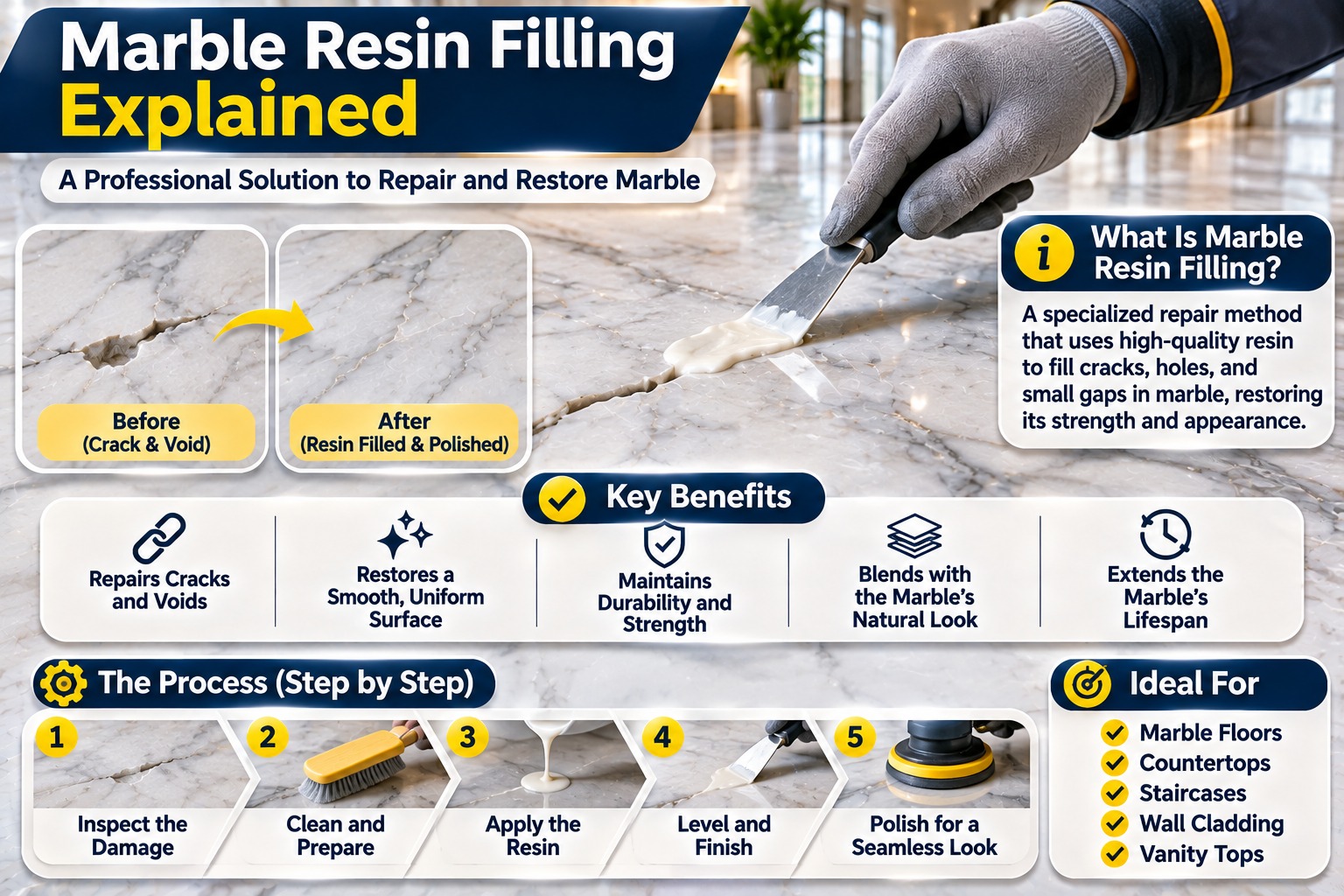
Marble resin filling is a restoration technique that uses specially formulated resin to fill small holes, cracks, chips, and other surface defects. The resin helps create a smoother appearance and improves the overall finish of the stone.
When Marble Resin Filling Explained is considered during marble selection or restoration, it becomes easier to understand how professional treatment can improve the appearance of natural stone.
Why Does Marble Need Resin Filling?
Natural marble forms through geological processes, which means its structure may contain veins, small cavities, and natural irregularities. Some imperfections are part of the stone’s natural character, while others may develop during transportation, cutting, handling, or installation.
Common reasons for using resin filling include repairing:
Small holes and cavities.
Minor cracks and fissures.
Surface chips and damaged edges.
Natural voids in selected marble varieties.
Small imperfections that affect the polished finish.
Understanding Marble Resin Filling Explained is particularly useful when choosing marble slabs for countertops, flooring, stairs, and decorative wall applications.
How Does Marble Resin Filling Work?
The resin filling process requires careful preparation to achieve a consistent and attractive result. Professional stone technicians inspect the marble, identify the damaged areas, and select a suitable resin according to the stone type and intended finish.
The general process includes several stages. First, the marble surface is cleaned to remove dust, dirt, and loose particles. Next, the technician prepares the affected areas and applies the appropriate resin to fill the holes or cracks.
After the resin cures, excess material is removed, and the surface may be polished to achieve a smooth finish. The final appearance depends on the resin formulation, colour matching, stone condition, and finishing method.
This is an important part of Marble Resin Filling Explained, because correct application can make repairs less noticeable.
Types of Resin Used for Marble Filling
Different resin products are available for natural stone treatment. The appropriate choice depends on the marble’s condition, colour, application, and required finish.
Epoxy Resin: Epoxy products are commonly used for filling selected cracks, voids, and damaged areas. Their suitability depends on the product specifications and repair requirements.
Polyester Resin: Polyester resin is used in some marble processing and filling applications. It can help fill small cavities and improve the surface appearance when applied correctly.
Colour-Matched Resin: Some repair applications require resin pigments to create a closer match with the marble’s natural colour and pattern.
In Marble Resin Filling Explained, choosing the correct resin is essential because different products have different curing, bonding, and finishing characteristics.
Benefits of Marble Resin Filling
Professional resin filling offers several advantages for suitable marble surfaces. It can improve the appearance of natural stone while helping repair imperfections that may otherwise remain visible.
Key benefits include:
Filling selected holes and surface cavities.
Improving the visual consistency of marble.
Supporting a smoother polished finish.
Repairing certain minor chips and cracks.
Helping prepare marble slabs for installation.
Improving the appearance of suitable countertops and flooring.
However, resin filling is not a solution for every type of damage. Structural cracks, extensive deterioration, or unstable stone may require a different repair or replacement approach. This is why Marble Resin Filling Explained should always include an assessment of the stone’s condition.
Where Is Marble Resin Filling Used?
Marble resin filling is used in several residential and commercial applications. It may be suitable for selected marble slabs, countertops, floors, stairs, bathroom surfaces, and decorative wall panels.
In kitchens, resin filling can improve the appearance of suitable marble countertops. In living rooms and entrances, it can help address small surface imperfections in marble flooring. For stairs and wall cladding, professional treatment may improve the finish before installation.
When planning a project, Marble Resin Filling Explained helps property owners understand which marble applications may benefit from this process.
How to Maintain Resin-Filled Marble
Proper maintenance helps preserve the appearance of treated marble. Use a soft cloth and a pH-neutral cleaner designed for natural stone. Avoid acidic products such as vinegar and lemon-based cleaners, as they can damage marble surfaces.
Clean spills promptly, avoid abrasive cleaning tools, and follow the maintenance recommendations provided by the stone supplier or restoration specialist. Also, inspect repaired areas periodically, particularly in frequently used spaces.
An important part of Marble Resin Filling Explained is understanding that resin-filled marble still requires regular care. Resin does not make natural marble completely resistant to scratches, stains, or chemical damage.
For additional natural stone maintenance advice, visit the Natural Stone Institute.
Choose Natural Marble with Savan Store
Selecting suitable marble is an important step in creating attractive residential and commercial interiors. Savan Store offers natural stone options for different design requirements and applications.
Explore the Savan Store website and browse the Natural Stone Collection to discover available materials for your project.
Before purchasing, inspect the actual marble samples or slabs and ask about their condition, finish, and maintenance requirements. Understanding Marble Resin Filling Explained can also help you discuss surface treatment and repair options with your stone supplier.
Conclusion
Marble resin filling is a useful technique for repairing selected holes, cracks, chips, and surface imperfections in natural stone. The right resin and professional application can improve the appearance of suitable marble surfaces and help achieve a smoother finish.
Understanding Marble Resin Filling Explained allows homeowners, designers, and contractors to make informed decisions when selecting or restoring marble. With proper installation, suitable cleaning products, and regular maintenance, resin-filled marble can remain an attractive feature in different interior spaces.